
Tanzania Program
Ending FGM.
Protecting girls.
Restoring futures.
Our Tanzania program was born out of compassion and a deep commitment to communities facing gender-based violence (GBV), Female Genital Mutilation (FGM/C), child marriage, homelessness, and barriers to education. We believe a future is possible where girls and women across East Africa live free from FGM/C, with access to safety, healthcare, education, and economic opportunity.
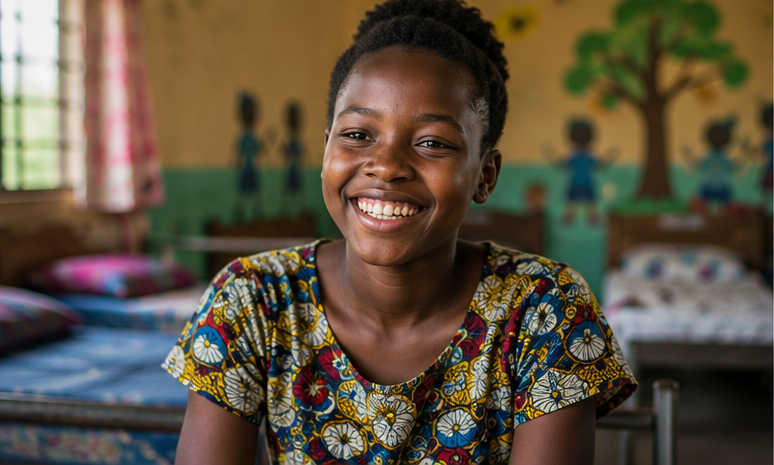
Our Tanzania Program
In Tanzania’s Mara region, the challenge is made more complex by the border it shares with Kenya. Cross-border ties create gaps in coordinated protection, and a girl fleeing FGM in one country can find herself at risk again just across the border.
Our work is focused: prevent FGM/C, support survivors of gender-based violence — including rape, sexual assault, and domestic violence — rescue girls at risk, and empower them through education, skills, and advocacy.
How It Works?
Our guiding principles are respect, equity, integrity, and collaborative action that strengthens grassroots impact.
We work to identify and support girls and women fleeing FGM and other forms of gender-based violence, including rape, sexual assault, domestic violence, and early and forced marriage. In the Mara region, we partner with safehouses that provide immediate refuge, care, and protection. We’re also building toward a longer-term solution: a dedicated, fully equipped safehouse in Tarime, developed in partnership with the Catholic Diocese of Musoma.
Once safe, survivors receive emotional support, help with basic needs, and access to education from primary school through college as well as apprenticeship opportunities and connections to community resources that help them rebuild their lives.
Safety on day one isn’t enough — survivors need a path that doesn’t lead back to the circumstances they escaped. We work to build survivors’ social and economic independence, through skills training, livelihood support, and community connection, so that economic hardship or social pressure never forces a return to an unsafe home or situation.
Economic Empowerment for Abandonment FGM often persists in part because it’s a livelihood where practitioners(the cutters) often senior women, rely on it for income. We work directly with the practitioners to offer viable economic alternatives, creating a real incentive to abandon the practice for good. It’s a practical complement to advocacy in which causational or contributary factors are replaced with viable options. We believe that changing the economics, provides choices and therefore it leads to better income generation choices.
The Kuria community spans the Kenya–Tanzania border, and FGM doesn’t stop at that line. Porous borders, family ties, and cultural networks can make the practice harder to track and easier to hide. We respond by working within a multi-stakeholder cross-border taskforce, coordinating action between Tanzania and Kenya to close protection gaps and keep at-risk girls safe.
We provide legal aid and case management for survivors seeking justice and redress for the violence committed against them.
Where safe, we support family mediation and dialogue to help rescued girls reintegrate with their families and communities. When reintegration isn’t possible, a girl’s safety remains our first priority — and we plan for long-term care, including education, that prepares her for a self-reliant future with dignity.
Through periodic medical missions with local hospitals and practitioners, our survivor care program supports holistic recovery — medical and psychosocial.
Beyond direct rescue work, we advocate for policies and community change that protect girls’ rights and challenge the social norms that allow FGM and early marriage to persist.
Interested in supporting our work in Tanzania?
Learn how you can partner with us.

