
Kenya Program
Education. Dignity. A Path Forward.
We believe every person deserves the chance to meet their most basic needs and protect their most basic rights. Our Kenya Program focuses on two pillars that are key drivers to accessing those rights: education and community empowerment, reaching marginalized groups. We reach children in informal schools, institutionalized children and girls particularly whose education and wellbeing is impacted by harmful practices specifically female genital mutilation (FGM) and early marriages.
The Context
Kenya is a lower‑middle‑income country, yet poverty remains widespread. Of a population of 56.4 million, an estimated 11.9 million people live in poverty, and 45.5% live on less than US $3 a day.
Marginalized communities, especially those in urban informal settlements, struggle with limited access to clean water, sanitation, and quality education. While the country has made progress nationally to expand access to education, children impacted by poverty still face significant barriers to benefiting from government investment in education.
Education Initiatives
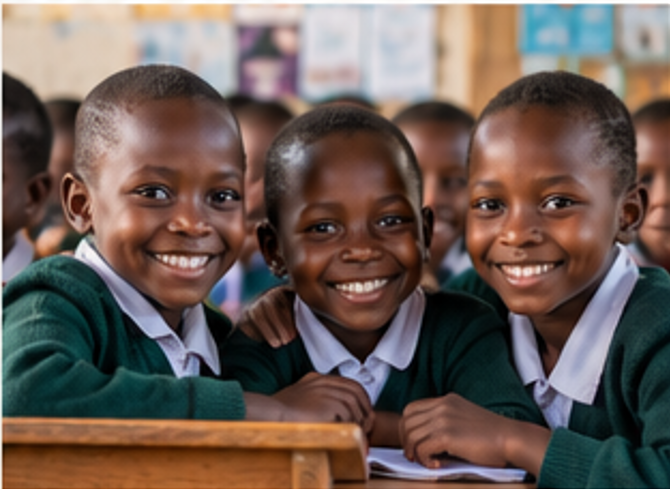
Children in Informal Schools
In Nairobi’s informal settlements, government investment is limited. Families often cannot afford hidden schooling costs, leading to reliance on APBET (Alternative Provision of Basic Education and Training) schools.
We support these schools by:
- • Donating books and learning materials
- • Partnering with other organizations to provide food programs
- • Promoting holistic child development, including nutrition and psychosocial wellbeing
Children in Children’s Homes
Institutional care, while necessary for some, can negatively affect physical, psychological, and cognitive development. Many children in these institutions have either lost a parent or both parents thereby facing stigma, grief, and lack of counseling.
Our program responds by:
- • Supporting child wellbeing projects
- • Providing education and psychosocial support
- • Supporting efforts to transition toward family based care
Children Living With Incarcerated Moms
Kenyan law allows mothers to keep children in prison until age four. Yet prisons are not built for children, leaving them vulnerable during critical developmental years.
We focus on:
- • Creating child friendly care centers with toys, books, and learning materials
- • Training caregivers in early childhood development
- • Supporting responsive parenting and play therapy to strengthen mother child bonds
Community Empowerment

Supporting Ex Prisoners
Ex‑prisoners face heavy stigma, often denied housing and business opportunities despite vocational training. We begin support before release, building trust and relationships inside prisons.
Our initiatives include:
- Apprenticeships with SMEs and training institutes
- Recreational programs (beauty pageants, soccer tournaments) to lift morale
- Plans for a half‑way house to break cycles of re‑offending
We believe that once someone has served their sentence, they deserve hope and dignity.
Ending Harmful Practices
In Kenya, female genital mutilation and the subsequent early marriage are outlawed. The national prevalence rates of occurrence of these practices have been on the decline however among some communities this is still high. Our program focuses on the Kuria community, a border community that live along the south western Kenya and north western Tanzania border in which the practice is still has a high prevalence. We support the girls fleeing FGM through immediate safe protection and long term community engagement for the abandonment of FGM and early marriage.

Interested in supporting our work in Tanzania?
Learn how you can partner with us.

